Posted on: 21/05/2025
in
This content is located in CAPS under Internet Technologies: Internet and the WWW for Grade 11.
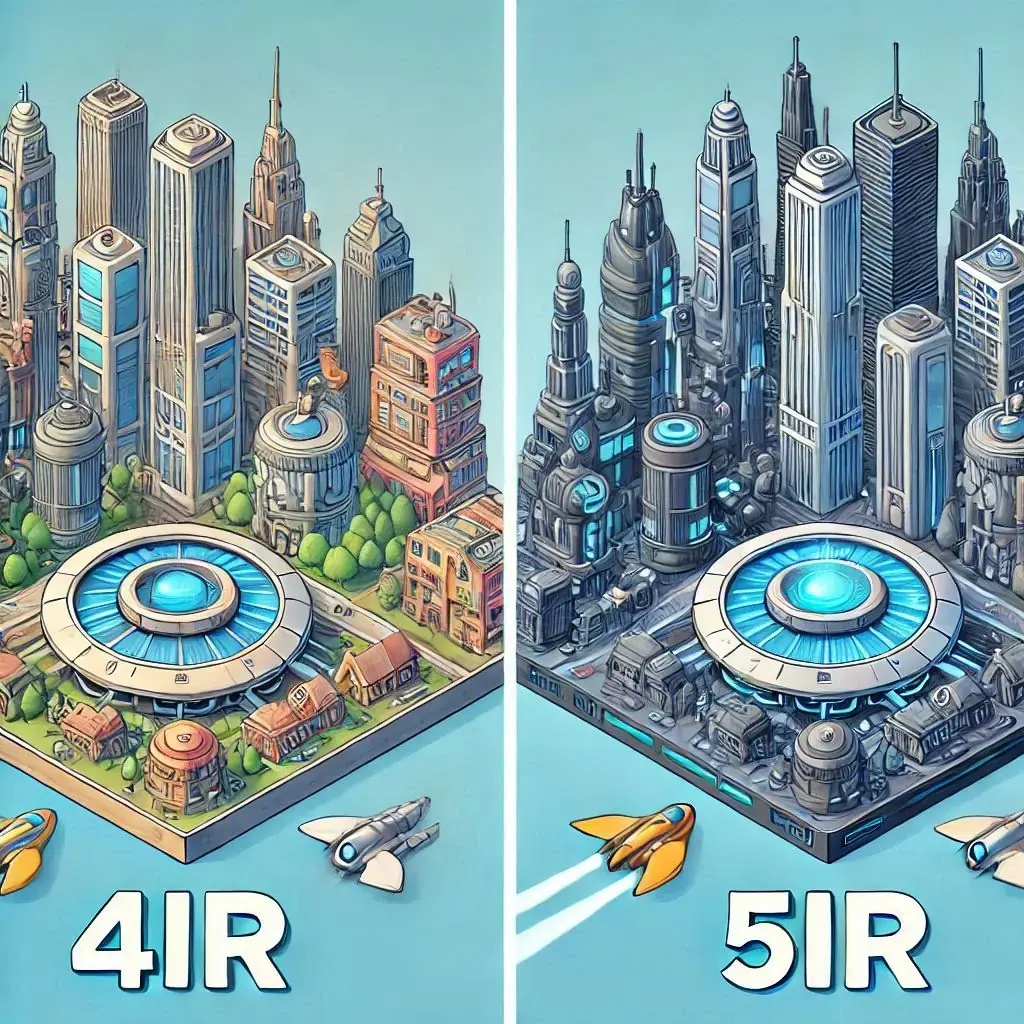
The Fourth Industrial Revolution (4IR) and Fifth Industrial Revolution (5IR) are transformative periods that define our interaction with technology and its impact on society. For Grade 11 learners, understanding these concepts is not only crucial for grasping technological advancements but also for appreciating their societal implications.
To make this theoretical content practical and relatable, consider using these engaging approaches:
Relating 4IR to Daily Life
Explain how 4IR focuses on automation and smart technologies. Use relatable examples such as:
- Smartphones: Highlight features like virtual assistants, facial recognition, and real-time language translation.
- Wearables: Discuss devices like smartwatches and fitness trackers.
- IoT at Home: Use examples like smart fridges or voice-controlled lighting to illustrate interconnected devices.
Ask learners to list devices they encounter daily that fit into the 4IR paradigm. Challenge them to think critically about how these devices improve efficiency or present challenges, such as data privacy.
Exploring the Leap to 5IR
Explain that while 4IR emphasises technology’s efficiency, 5IR focuses on harmonising technology with human creativity and sustainability. Discuss:
- Personalised Medicine: Customised health treatments.
- Collaborative Robots (Cobots): Machines designed to work alongside humans safely.
- Sustainable Technologies: Renewable energy and green computing.
Prompt learners to brainstorm examples of how technology can be human-centric, such as apps for mental well-being or robots assisting the elderly.
Hands-On Classroom Activities
- Design a Smart Device
- Divide the class into small groups. Each group designs a smart device that addresses a real-world issue, like water conservation or reducing electricity usage.
- Groups present their ideas, explaining how it reflects the principles of 4IR or 5IR.
- Data Flow Simulation
- Use a flowchart exercise to demonstrate how an IoT device collects, processes, and transmits data. For example, a weather sensor that sends rainfall data to a weather app.
- Debate on Societal Impact
- Organise a debate on topics such as, “Does 4IR make jobs redundant or create new opportunities?” or “Is 5IR the solution to environmental challenges?”
- This activity encourages critical thinking and awareness of societal implications.
Real-World Connection: Invite Guest Speakers
Invite professionals working in tech industries to share how 4IR and 5IR influence their roles. For instance:
- A software engineer explaining AI in customer service.
- A renewable energy specialist discussing how green tech innovations align with 5IR.
Technology in Under-Resourced Environments
For schools with limited resources, adapt the activities:
- Use posters or diagrams instead of digital presentations.
- Explore free online tools or mobile apps that simulate IoT concepts.
- Facilitate discussions on how technology can address local issues, such as healthcare or education challenges.
By linking these revolutions to practical, everyday scenarios, learners develop an appreciation for their transformative potential and the critical thinking needed to navigate a tech-driven world.