Posted on: 11/04/2025
in
This content is located in CAPS under Social Implications: Impact on Society for Grade 12.
Understanding internet attacks such as DDoS (Distributed Denial of Service), bots, and zombies is essential for Grade 12 students to grasp the complexities of cybersecurity and the implications for individuals, organisations, and society. These concepts tie directly to the social and technical challenges faced in managing and securing digital environments.
To make this topic relatable and practical in the classroom, consider the following engaging approaches:
Make It Tangible: The Basics of Internet Attacks
Start by demystifying the terminology:
- DDoS Attacks: Explain this by simulating an analogy. Imagine a school office that receives thousands of fake calls at once, preventing legitimate calls from getting through. Relate this to how multiple systems overwhelm a target server in a DDoS attack.
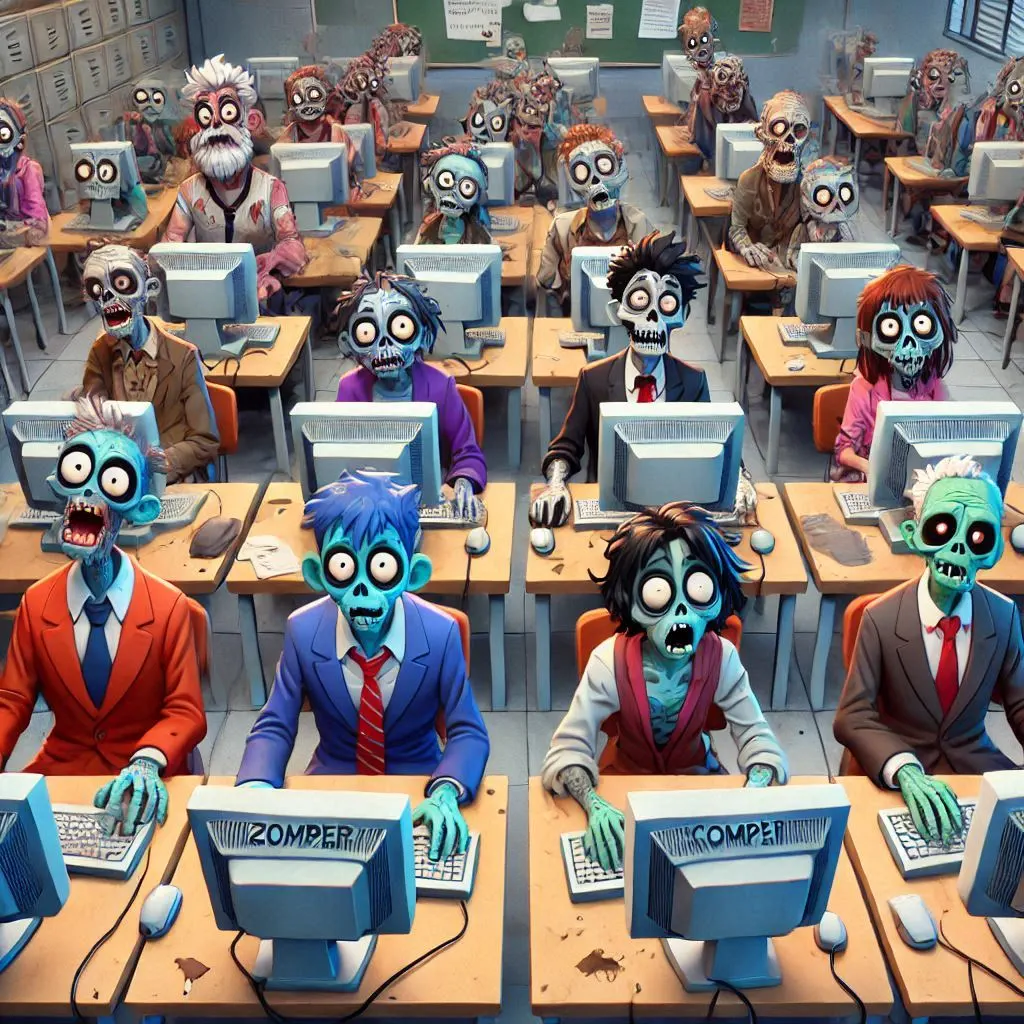
- Bots and Zombies: Describe bots as “robot programs” designed to perform repetitive tasks, and zombies as computers that have been hijacked to participate in malicious activities without the owner’s knowledge. Compare this to puppets being controlled by a hidden puppeteer.
Interactive Classroom Activities
- Role-Playing Scenarios:
- Assign groups to represent “attackers,” “targets,” and “defenders.” The attackers simulate how bots are programmed to overwhelm a target website, while the defenders brainstorm methods to protect it. This promotes understanding of both sides of cybersecurity.
- Cyber Forensics Challenge:
- Create a fake “server log” with patterns indicating DDoS attempts. Students act as cybersecurity analysts, identifying suspicious traffic and hypothesising how to mitigate the attack.
Relating to Real Life
- Share relatable examples of DDoS attacks, such as disruptions of popular social media platforms. Discuss how these attacks impact businesses, governments, and individuals.
- Highlight how bots are used in legitimate activities (e.g., search engine indexing) and compare this to their misuse in spam and attack networks.
Creative Demonstrations
- The Zombie Army Visual:
- Use a simple paper-based activity where students write “messages” (representing bot commands) and pass them along a chain (representing the network). The “target” receives a flood of messages, simulating a DDoS attack.
- Videos and Simulations:
- Show a short video demonstrating how botnets are formed and how DDoS attacks unfold. Follow this with a class discussion on prevention strategies.
Building Cybersecurity Awareness
Encourage students to think critically about safeguarding their devices to avoid them being turned into zombies:
- Install updates regularly.
- Use strong passwords and enable multi-factor authentication.
- Avoid clicking on suspicious links or downloading unverified attachments.
Encourage Ethical Thinking
Discuss the ethical implications of cyberattacks. What motivates attackers? How do these actions affect society at large? This can evolve into a debate or reflective essay task.
By using hands-on activities, real-life examples, and thought-provoking discussions, this topic can be transformed into an engaging learning experience that leaves students with both knowledge and curiosity about cybersecurity’s role in society.