Posted on: 02/02/2026
in
Separating automation myths from reality, and how to stay relevant in an AI-augmented workplace
You are halfway through your workday when someone drops the sentence: “AI is going to replace most jobs.” Suddenly, every task feels suspicious. That report you are writing, the emails you send, even your weekly meeting notes. It creates a quiet question in the back of your mind. Where do I fit if machines start doing all of this?
The Important Stuff
AI is very good at handling repeatable, structured tasks. It rewrites emails, summarises documents, and analyses data faster than any human. Give it a clear instruction and it delivers a clean output in seconds. That sounds alarming until you notice something. It only works well when someone guides it. Without direction, context, and judgement, the output quickly falls apart.
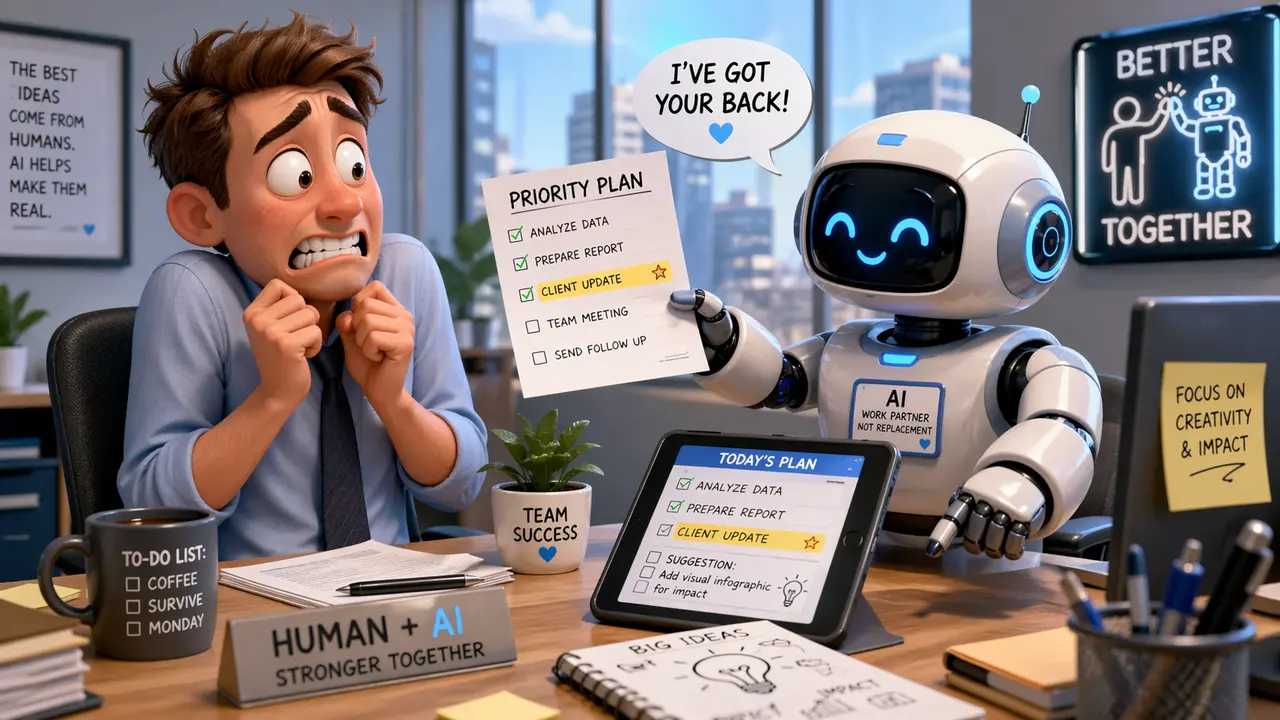
Your role shifts instead of disappearing. Workplaces still need people to decide what matters, check accuracy, and apply context that AI does not have. Understanding AI in the workplace means seeing it as a tool that expands your capacity rather than replacing your thinking. The people who adapt fastest are not the ones competing with AI. They are the ones directing it.
Now It’s Your Turn
Here is an example of a prompt you can use right now in an AI chat of your choice. Copy the prompt text below and paste it into an AI chat platform such as ChatGPT, Gemini, Copilot or Claude.
I want to understand how AI could support my current job without replacing my responsibilities.

Here is a list of my main tasks:

[Describe your daily or weekly tasks]
For each task, explain:

- What parts AI could assist with

- What parts still require human judgement

- How I can improve my role by working with AI

Keep the advice practical and relevant to a corporate work environment.
Your Job Is Changing, Not Disappearing
The real risk is not AI taking your job. It is someone who knows how to use AI doing your job faster and clearer. That shift rewards people who stay curious and test new tools in real work situations. You do not need to become a technical expert. You need to become comfortable working alongside AI and using it to extend what you already do well.