Posted on: 03/05/2026
in
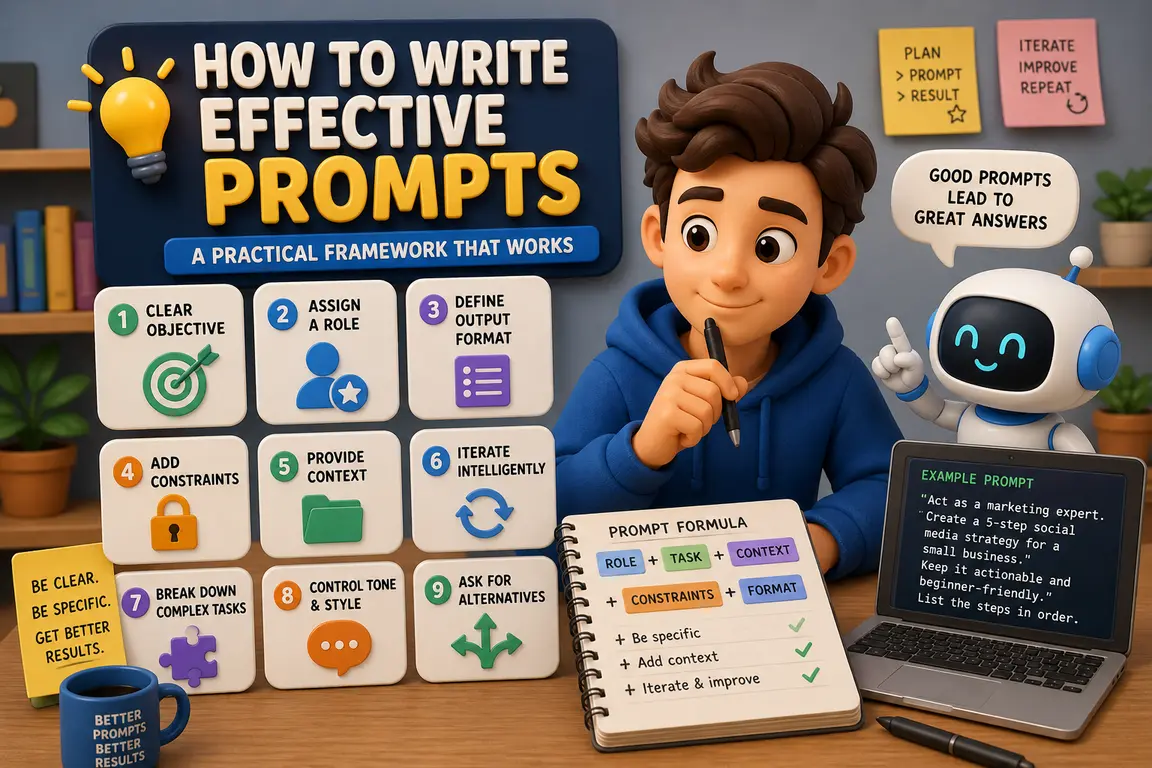
Most people approach prompting as trial and error—type something, tweak it, hope for a better result. That works, but it’s inefficient. If you want consistent, high-quality outputs, you need a structured way to communicate with AI. This article focuses on how to prompt effectively, regardless of the topic. Think of it as a mental model you can reuse across writing, coding, research, or problem-solving.
Use This Simple Prompt Template
[Role] + [Task] + [Context] + [Constraints] + [Output Format]
Example:
“Act as a UX designer. Create a homepage layout for a fitness app targeting beginners. Keep it simple and mobile-first. Provide a section-by-section breakdown.”
Common Mistakes to Avoid
- Being vague (“tell me about…”)
- Asking multiple unrelated questions at once
- Not specifying format or constraints
- Expecting perfect results on the first try
If you remember nothing else, use this checklist:
- What exactly do I want?
- Who should the AI act as?
- What should the output look like?
- What constraints matter?
- Do I need to provide context?
Answer those five, and your prompts will outperform most users immediately. Prompting isn’t about clever wording—it’s about clear thinking. The better you define the problem, the better the AI can solve it. Treat prompts like instructions to a highly capable but literal assistant.