Posted on: 18/05/2026
in
Using AI to organise information, recall details, and extend your cognitive capacity
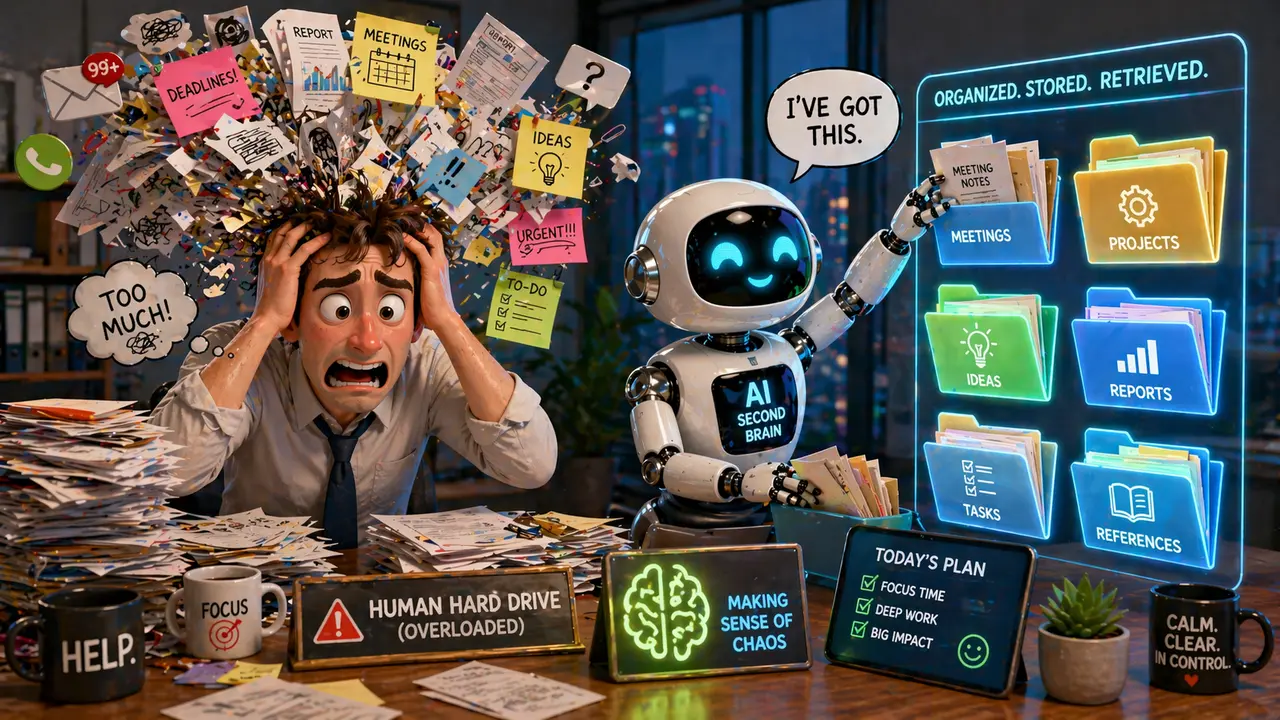
You remember that one meeting from last week. There was a key decision, a number someone mentioned, and an action item with your name on it. The problem is, it is all floating somewhere in your head along with fifty other things. You dig through notes, emails, and half written documents trying to piece it together. Then you realise you could have just asked your “second brain” instead.
The Important Stuff
Work today is less about doing tasks and more about managing information. Notes from meetings, random ideas, project updates, deadlines, and documents all compete for attention. AI acts as a central place to store, organise, and retrieve that information. You can feed it notes, documents, and thoughts, then ask questions like “What were the key actions from last week?” or “Summarise everything related to this project.”
This matters because memory has limits, but your workload does not. Using AI as a second brain means you stop relying on trying to remember everything yourself. Instead, you focus on capturing information and retrieving it when needed. The result is fewer things slipping through the cracks and less mental clutter slowing you down.
Now It’s Your Turn
Here is an example of a prompt you can use right now in an AI chat of your choice. Copy the prompt text below and paste it into an AI chat platform such as ChatGPT, Gemini, Copilot or Claude.
I want you to act as my second brain for work. I will give you notes, ideas, and information over time.

For now, organise the following information and make it easy to retrieve later:

Summarise the key points

- List any action items

- Group related topics

- Suggest a simple structure I can reuse

Information:

[Paste your notes, emails, or thoughts here]
Stop Trying to Remember Everything
Your brain is great for thinking, not for storing endless details. Offloading information into AI frees up space to focus on decisions, ideas, and actual work. The more you use it this way, the less time you spend searching and the more time you spend moving forward.